
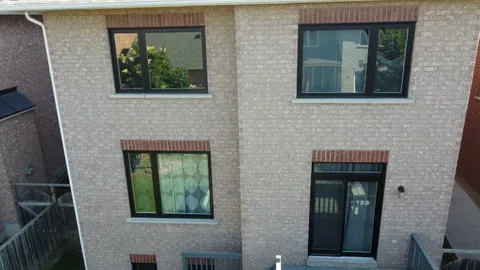
Windows and doors are among the highest-leverage upgrades a homeowner can make to a property’s comfort and energy performance and also among the easiest to get wrong. Two windows that look identical on a showroom floor can perform very differently once installed, because performance in Edmonton’s climate depends less on the product label and more on a combination of glazing specification, frame material, and installation quality that most homeowners never learn to evaluate before signing a contract.
This article breaks down what actually determines how well windows and doors perform in Edmonton specifically: the technical ratings that matter, how frame and glazing choices interact with extreme temperature swings, and what separates a properly executed installation from one that will underperform regardless of the product installed
Why Edmonton’s Climate Changes the Calculation
Edmonton experiences some of the widest seasonal temperature swings of any major Canadian city deep winter cold well below -20°C combined with warm, sometimes hot, summer days. This range matters for windows and doors specifically because thermal performance isn’t static; a product rated well for a mild coastal climate may perform noticeably worse once exposed to sustained prairie cold
A few climate-specific effects are worth understanding before comparing products:
- Extreme cold widens the performance gap between glazing types. The difference between double-pane and triple-pane glazing, or between different low-emissivity coatings, becomes far more noticeable at -30°C than it would in a climate that rarely drops below freezing.
- Large temperature swings stress frame materials differently. Materials expand and contract with temperature, and a frame poorly suited to this range can develop seal failures, warping, or air leakage over time even if it performed fine when new.
- Condensation risk increases in cold climates because the temperature differential between indoor and outdoor air is larger for more of the year — poorly performing windows are more prone to interior condensation and, over time, associated moisture damage to surrounding frames and sills.
- Wind exposure on an open prairie landscape increases the real-world impact of air infiltration around window and door seals compared to more sheltered urban environments.
Because of these factors, a specification that’s considered adequate in much of the country can be genuinely inadequate for Edmonton’s climate — which is why understanding the underlying ratings matters more here than in milder regions.
The Ratings That Actually Predict Performance
Marketing materials often lead with vague claims like “energy efficient” without specifying what that means in technical terms. A few standardized ratings tell the real story:
U-factor measures how well a window or door prevents heat from escaping lower numbers indicate better insulation. This is the single most relevant rating for a cold climate like Edmonton’s, since it directly reflects how much heat loss occurs through the unit during winter.
Solar Heat Gain Coefficient (SHGC) measures how much solar heat passes through the glazing. In Edmonton’s climate, a moderate SHGC on south- and west-facing windows can be beneficial in winter (passive solar heat gain reduces heating demand) while a lower SHGC may be preferable on windows prone to summer overheating — the right balance depends on orientation, not a single universal target.
Air leakage rating measures how much air passes through the window or door assembly itself, independent of the surrounding installation. This matters because even an excellent window with a poor air leakage rating will underperform in a windy, cold climate.
Energy Rating (ER) combines U-factor, SHGC, and air leakage into a single comparative number, making it a useful shorthand once a homeowner understands what’s being combined — though it shouldn’t replace looking at the individual metrics when making orientation-specific decisions.
A window or door with strong numbers across these ratings, installed poorly, will still underperform a moderately-rated product installed correctly — which is why product specification and installation quality need to be evaluated together, not as separate decisions.
Frame Material Trade-Offs for Prairie Winters
Frame material affects durability, maintenance, and thermal performance differently, and the right choice depends on specific priorities:
Vinyl frames are the most common choice for good reason — low maintenance, competitive cost, and generally strong thermal performance when properly manufactured with multi-chamber designs. Quality varies significantly between manufacturers, though, and lower-grade vinyl can become more brittle in extreme cold over time than higher-grade formulations designed specifically for cold-climate performance.
Wood frames offer strong natural insulating properties and a traditional aesthetic many homeowners prefer, but require more ongoing maintenance to manage moisture exposure and prevent rot, particularly given Edmonton’s freeze-thaw cycling and seasonal moisture swings.
Composite frames combine wood-like performance characteristics with reduced maintenance requirements compared to pure wood, at a cost point that typically sits above vinyl — a middle-ground option for homeowners prioritizing durability and aesthetics without the full maintenance commitment of wood.
Fiberglass frames, while less commonly discussed, offer excellent dimensional stability across temperature extremes — they expand and contract less than vinyl, which can translate to more consistent seal performance over decades of Edmonton’s temperature swings, generally at a premium price point.
Why Installation Quality Determines Real-World Performance
The manufacturing rating on a window or door describes its performance as tested in a controlled setting — not how it will actually perform in a specific wall opening, installed by a specific crew, in Edmonton’s specific climate. Installation quality closes or widens that gap significantly:
Accurate measurement and fit prevent the gaps and compression issues that lead to air infiltration around an otherwise well-rated unit. A unit that’s slightly too small for its opening, compensated for with excessive shimming or sealant rather than a properly sized replacement, rarely performs as well as its rating suggests.
Proper flashing and moisture management around the window or door opening prevents water intrusion into the surrounding wall assembly — a detail that’s invisible once finished but critical for preventing hidden rot or mold behind the frame over time.
Insulation and sealing around the frame, not just at the visible interior trim, is what actually prevents the air leakage that undermines an otherwise well-specified product. This is one of the most common places where a rushed or lower-quality installation quietly reduces real-world performance below the product’s tested rating.
Weatherstripping and hardware adjustment on operable windows and doors need to be correctly set during installation and periodically checked afterward, since improperly adjusted hardware is a common source of drafts that gets misattributed to the product itself rather than the installation.
A homeowner comparing quotes purely on the product brand and sticker price, without asking about the installer’s approach to flashing, sealing, and fit, is comparing an incomplete picture of what actually determines the final result.
Recognizing When Windows or Doors Need Replacement
A few signs reliably indicate that windows or doors have reached the point where repair no longer makes sense relative to replacement:
- Visible condensation or fogging between panes on double- or triple-glazed units, indicating a failed seal that can’t be repaired
- Noticeable drafts near the frame that persist even after weatherstripping adjustment
- Difficulty opening, closing, or locking that isn’t resolved by simple hardware adjustment
- Visible rot, warping, or water staining on wood frames or surrounding trim
- A noticeable difference in room temperature near windows compared to the rest of the home
- Rising heating or cooling costs without another clear explanation
Any one of these, especially combined with a home’s windows or doors being original to a build older than 15–20 years, is generally worth a professional assessment rather than continued patching.
Choosing Between Repair and Full Replacement
Not every window or door problem requires full replacement. Isolated issues — a failing seal on one unit, hardware wear, or minor weatherstripping degradation — are often addressable through targeted repair, particularly on otherwise sound, well-installed units.
Full replacement becomes the more sensible option when multiple units show age-related wear simultaneously, when the frame material itself has degraded structurally, or when upgrading to meaningfully better thermal performance is a priority independent of any specific failure. Homes with original single-pane or early double-pane windows, in particular, often see a meaningful comfort and efficiency improvement from full replacement that targeted repair simply can’t deliver, since the underlying glazing technology itself is the limiting factor.
Frequently Asked Questions
How much does window replacement typically cost in Edmonton?
Costs vary significantly based on window size, frame material, glazing specification, and number of units, ranging from a few hundred dollars per window for standard vinyl units to significantly more for larger, premium, or custom-sized installations. A detailed quote following an in-home assessment gives the most accurate picture for a specific property.
Is triple-pane glazing worth the extra cost in Edmonton’s climate?
For Edmonton’s temperature range, triple-pane glazing often provides meaningful improvements in comfort and efficiency over double-pane glazing, particularly for north-facing units or homes with higher heating costs — though the payback period depends on current energy costs and how long the homeowner plans to stay in the home.
Can window replacement be done during Edmonton winters?
Yes, professional installers can replace windows in cold weather, though it requires careful scheduling to minimize the time a home is exposed to outside air during the swap, and some sealants or installation materials perform better within certain temperature ranges.
How long do quality windows and doors last in Edmonton’s climate?
Well-installed vinyl and fiberglass windows typically last 20–30+ years; wood frames with proper maintenance can last similarly long but require more active upkeep. Actual lifespan depends heavily on installation quality and product grade, not just material category.
Does installing a new window actually reduce energy bills?
Yes, particularly when replacing older single-pane or early double-pane units, or units with failed seals or significant air leakage. The magnitude of savings depends on the home’s current windows, orientation, and overall envelope condition — new windows alone won’t fully offset other envelope deficiencies, such as inadequate insulation elsewhere.
Final Thoughts
Choosing windows and doors for an Edmonton home comes down to understanding a handful of technical ratings, matching frame material to realistic maintenance expectations, and — just as importantly — confirming installation quality rather than assuming it. A well-rated product installed poorly will underperform its own specification sheet, while a solid, correctly installed mid-range product often outperforms a premium product installed carelessly. For homeowners evaluating a window and door upgrade in Edmonton, asking about flashing, sealing, and fit alongside the product specification itself is what actually predicts long-term comfort and efficiency.
Homeowners planning a broader exterior upgrade alongside window and door work often pair it with patio door replacement or a look at Hardie board versus vinyl siding to coordinate the home’s full exterior envelope. For general repairs or smaller-scope fixes that don’t require a full window replacement, residential handyman services may be the more practical starting point. More on the team and current project examples are available on the About Us page, and project inquiries can be directed through Contact Us.