
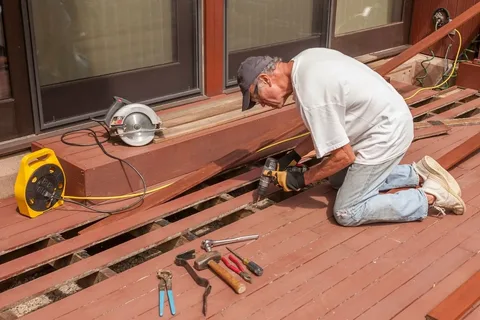
A deck is more than a wooden platform attached to the back of a house. In Edmonton, where the outdoor season is short and the climate swings are severe, a deck functions as an extension of the living room, a buffer between the house and the yard, and — when built correctly — a structure that has to survive freeze-thaw cycles, heavy snow load, UV exposure, and ground movement year after year. Understanding what “deck installation” actually involves in Edmonton means understanding the entities that make a deck succeed or fail: footings, frost depth, decking material, fasteners, railings, permits, and long-term maintenance.
At Schutz Enterprises, deck installation in Edmonton is treated as a full-scope process, not a single task. It starts with the ground beneath the deck and ends with the finish applied to the boards. Every stage in between determines whether the structure holds up for five years or twenty-five.
Why Deck Installation in Edmonton Requires Local Expertise
Edmonton sits in a climate zone where the frost line typically runs deeper than in milder Canadian cities. This single fact changes how a deck must be built. Footings that aren’t poured below the frost line will heave during winter, which throws the entire structure out of level, cracks boards, and loosens railings within a couple of seasons. A contractor who builds decks the same way regardless of region is building a deck that is set up to fail in Alberta.
Local expertise also means understanding Edmonton’s building permit requirements, snow load calculations, and how the wet spring thaw interacts with untreated or improperly sealed wood. A deck installer who has worked through multiple Edmonton winters knows where water tends to pool, which ledger board attachments hold up against ice damming, and which decking materials actually perform in -30°C weather without becoming brittle.
The Deck Installation Process, Step by Step
1. Consultation and Design Every project begins with understanding how the space will be used entertaining, quiet relaxation, cooking, or a combination of these. The design phase maps out deck size, shape, elevation, stair placement, and how the structure will connect to the home’s existing grade and doorways.
2. Site Preparation and Footings This is the stage most homeowners never see but that matters most. Footings are dug below the frost line, typically to a depth appropriate for Edmonton’s climate, and set with concrete piers or sonotubes. Skipping or shortcutting this step is the single most common cause of deck failure in this region.
3. Framing and Structural Support The substructure — posts, beams, and joists — is built to carry both the static weight of the deck and the dynamic load of furniture, people, hot tubs, or snow accumulation. Joist spacing and beam sizing are calculated based on the decking material chosen and the span involved.
4. Decking Material Installation Boards are laid, fastened, and spaced correctly to allow for material expansion, contraction, and drainage. This is where material choice becomes central to the finished product’s look and lifespan.
5. Railings, Stairs, and Finishing Details Code-compliant railings, stair stringers, and any built-in features such as bench seating, privacy screens, or lighting are added. Finishing touches sealing, staining, or capping protect the structure against Edmonton’s moisture and UV cycles.
6. Final Inspection and Handoff A completed deck is inspected for level, structural soundness, and code compliance before it’s handed over.
Choosing the Right Decking Material for Alberta’s Climate
Material selection is one of the most consequential decisions in any deck installation project, and it depends on the trade-offs between upfront cost, maintenance, and durability.
- Pressure-treated wood remains a popular, cost-effective option. It resists rot and insect damage when properly sealed, but it requires regular staining or sealing to prevent cracking and greying under Alberta’s intense summer sun and winter dryness.
- Cedar offers a naturally attractive grain and better resistance to warping than standard pressure-treated lumber, though it comes at a higher price point and still needs periodic maintenance.
- Composite decking is engineered from wood fibers and recycled plastics, offering high resistance to moisture, fading, and splintering. It costs more initially but requires little to no annual maintenance, which appeals to homeowners who want long-term value over upfront savings.
The right choice depends on how the deck will be used, how much maintenance a homeowner is willing to commit to, and the budget for the project. A knowledgeable deck installation team walks through these trade-offs during the design consultation rather than defaulting to a single material for every job.
Structural Considerations Unique to Edmonton Winters
Beyond footings, several other structural details matter specifically because of Edmonton’s climate:
- Ledger board flashing must be installed correctly where the deck attaches to the house, preventing water infiltration that leads to rot and, eventually, structural failure at the connection point.
- Fastener selection matters because standard fasteners can corrode or loosen under repeated freeze-thaw cycling; galvanized or coated hardware rated for exterior, cold-climate use is essential.
- Ventilation beneath the deck prevents moisture buildup that can accelerate rot in joists and beams, particularly during the spring melt.
- Snow load capacity needs to be factored into beam and joist sizing, since Edmonton decks often carry significant snow weight for months at a time.
These aren’t optional refinements — they’re the difference between a deck that needs to be rebuilt in under a decade and one that lasts a generation.
Deck Installation vs. Deck Building: Understanding the Distinction
“Deck installation” and “deck building” are often used interchangeably, but there’s a practical distinction worth understanding. Installation typically refers to the full process of constructing a new deck from the ground up, including permitting, footings, framing, and finishing. Deck building can also include renovations, expansions, or replacing an existing structure’s decking surface while reusing the substructure where it’s still sound.
How a Deck Fits Into a Broader Home Exterior Project
A new deck rarely exists in isolation. It’s frequently part of a larger effort to improve a home’s outdoor functionality and curb appeal — alongside updated siding, new windows, or replaced patio doors that connect the indoor and outdoor spaces. Homeowners planning a deck installation often find it worthwhile to evaluate the rest of their
Serving Edmonton and Surrounding Communities
While this page focuses on deck installation within Edmonton proper, the same climate-driven construction standards apply throughout the surrounding region. Homeowners in neighboring communities can find dedicated information
Maintenance: Protecting Your Investment After Installation
A properly installed deck still requires ongoing care to reach its full lifespan. Wood decks benefit from an annual inspection for loose fasteners, cracked boards, and areas where sealant has worn thin, followed by re-staining or re-sealing every two to three years depending on sun exposure. Composite decking requires far less intervention but still benefits from periodic cleaning to prevent debris buildup in board gaps. Homeowners who also need broader upkeep around the property — from fascia repair to general exterior fixes — often pair deck maintenance with our
Why Homeowners Choose Schutz Enterprises for Deck Installation
Schutz Enterprises approaches every deck installation project in Edmonton with the same standard: build below the frost line, use climate-appropriate materials and hardware, follow local building codes, and communicate transparent pricing from the first consultation to the final walkthrough. The result is a deck designed specifically for Alberta’s conditions rather than a generic build adapted after the fact.
Whether the project is a simple ground-level platform or a multi-tier outdoor living space with built-in seating, lighting, and privacy screening, the process starts the same way: a conversation about how the space will be used, followed by a design and structural plan built around Edmonton’s climate realities.
Ready to start your deck project? Contact Schutz Enterprises for a free consultation and quote.